Doliche, formerly known as Douchlista, is a settlement with deep historical roots in the region of Elassona. Although its first recorded mention dates back to 1506—when it had a remarkably large population for the period (approximately 1,400 inhabitants)—its trajectory through the centuries was marked by dramatic demographic shifts.
The Census of 1846: A Valuable Historical Record
The Ottoman census of 1846, published for the first time through the research of Evangelos Tsaknakis, constitutes a “snapshot” of a critical period in the village’s history. The data, transcribed from Arabic into Ottoman Turkish script by the Ottomanist scholar Levent Kayapinar, reveal a settlement in decline.
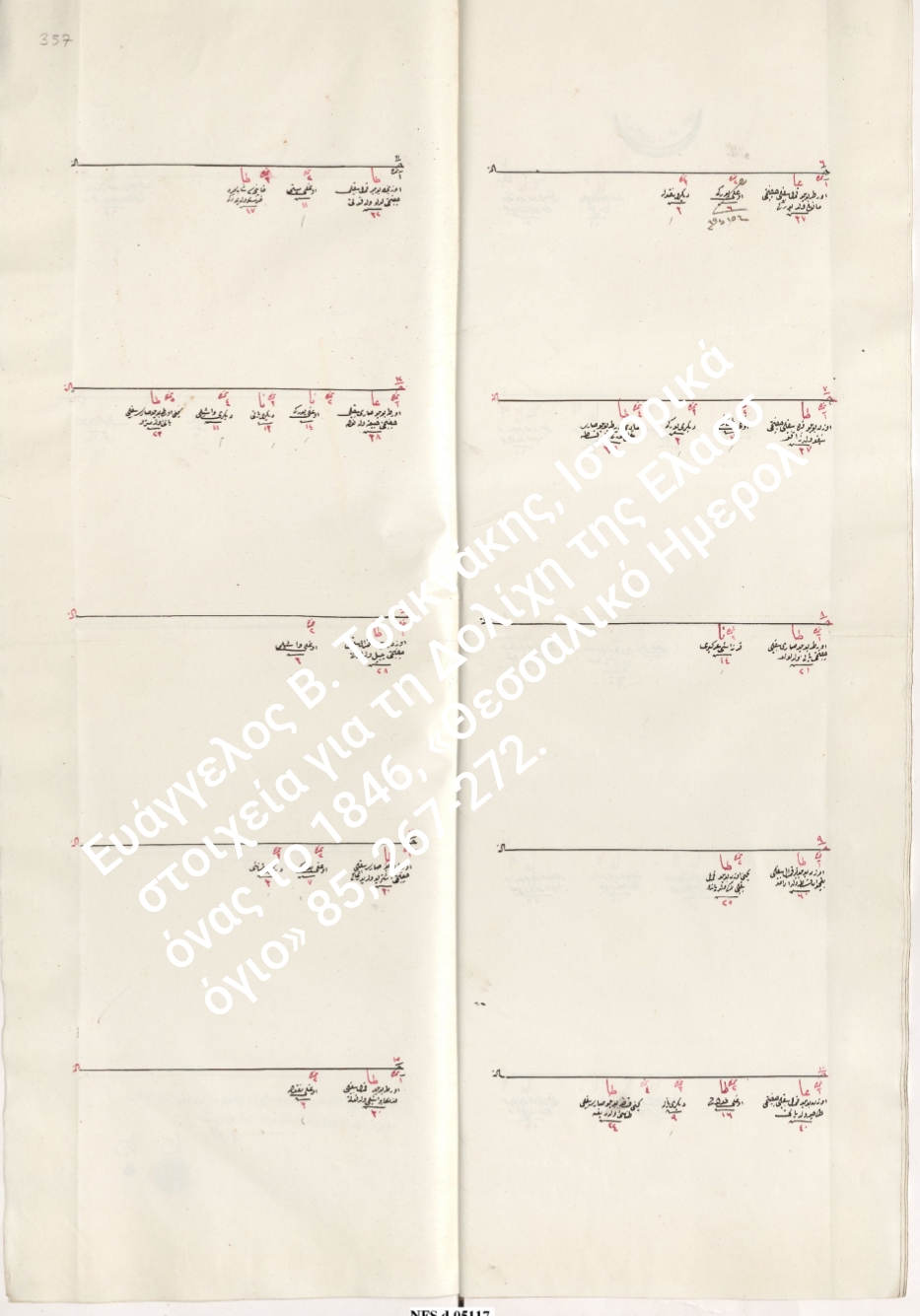
Population Figures
In 1846, Doliche counted only 17 families.
- Total number of males: 49 individuals
- Estimated total population: Approximately 100 inhabitants (including women and girls, who were not recorded in the census)
- Age range: From 2 to 65 years
Compared to the 215 families recorded in 1570, this decline is dramatic and is likely attributable to migration motivated by security concerns or to the successive plague epidemics that struck the Elassona region from the 15th to the 18th century.
Social and Economic Characteristics
Beyond personal names, the census also recorded physical characteristics for the identification of men, such as height and moustache color (blond, black, or grey).
Occupations and Taxation
The economic life of Dolichi in 1846 was predominantly agricultural:
- Zeugitai: 12 heads of households (farmers cultivating land with a pair of animals)
- Other occupations: One gardener (bahçe-bân), one laborer (hizmetkâr), and one church sexton
- Tax stratification: 8 individuals paid high taxes, 21 medium taxes, and 5 low taxes, while 15 minors were exempt
The presence of a sexton indicates that, despite its small population, the community maintained an active church.
Surnames in Dolichi: Then and Now
One particularly interesting finding of the research is the inability to link the names recorded in 1846 with those found in later Male Registers (Mitroa Arrenon).
- Names in 1846: Surnames were mainly patronymics (e.g. Adamou, Zachou, Stergiou), nicknames (e.g. Dombros, Dovas), or occupational names (e.g. Lavidas).
- Later developments: Many contemporary surnames appear to derive from later migrations from neighboring areas (e.g. the Tsaknakis family from Verdikousia or the Valiotis family from Azoros).
- The Lavidas–Gogos case: Research suggests that the older surname Lavidas was, in some cases, replaced by Gogos in the early 20th century.
Accounts of Travelers
Following the census of 1846, travelers such as Léon Heuzey (1860) described Doliche as a poor settlement of 12 houses with numerous ruins, possibly the result of the uprising of 1854. Nevertheless, by the end of the 19th century the population began to recover, reaching 172 inhabitants in 1904 and 216 in 1913.
Source: Evangelos V. Tsaknakis, Historical Data on Doliche of Elassona in 1846, Thessalian Calendar 85, pp. 267–272.
 DOLICHE
Σχολιάστε