A medical stronghold in the shadow of Mount Olympus through international archives
The history of Doliche during the Second World War is today documented with remarkable clarity through international archives, military diaries, and rare photographic material. In April 1941, the area of Doliche, at the foothills of Mount Olympus, was transformed into a critical link in the Allied defensive line, hosting important medical units of the New Zealand Expeditionary Force (2 NZEF).
This presence is uniquely captured in photographs held by the National Library of New Zealand (Alexander Turnbull Library) and is further corroborated by the official historical records of the medical units of the 2 NZEF.
The arrival of the 5th Field Ambulance and the selection of Dolikhe
On 3 April 1941, the 5th New Zealand Field Ambulance arrived at Doliche, at a time when Allied forces were preparing to defend the passes of Mount Olympus. The village’s geographical position—on the axis connecting the front line with the rear areas—made it an ideal location for the establishment of the Main Dressing Station (MDS).
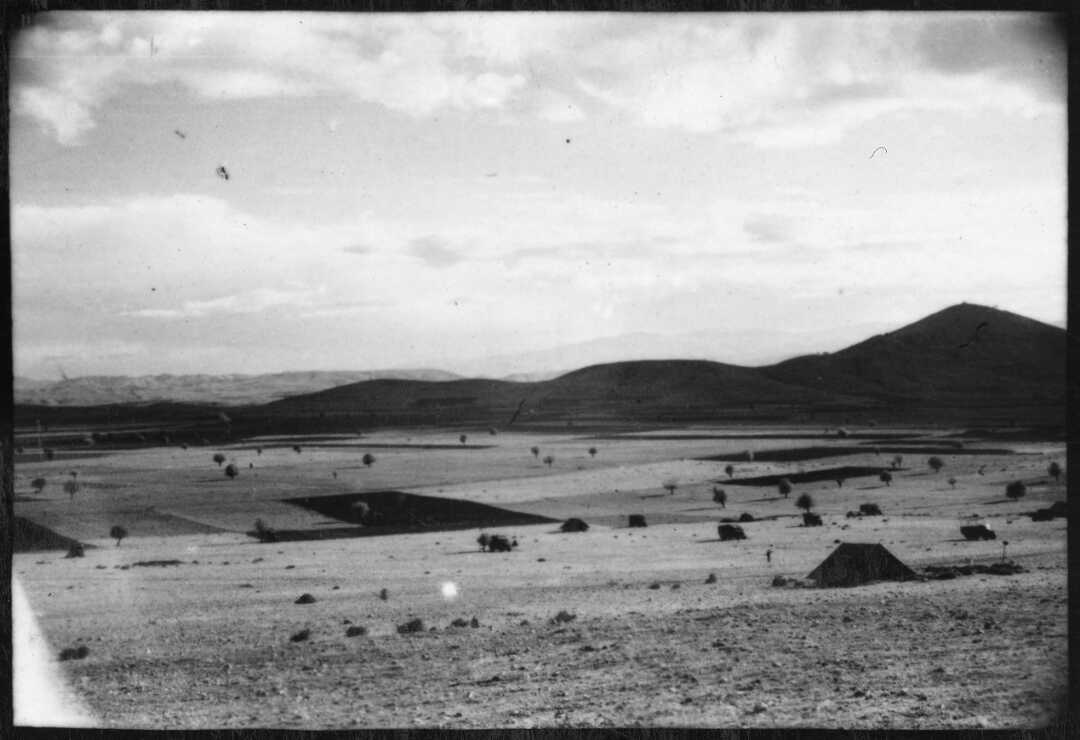
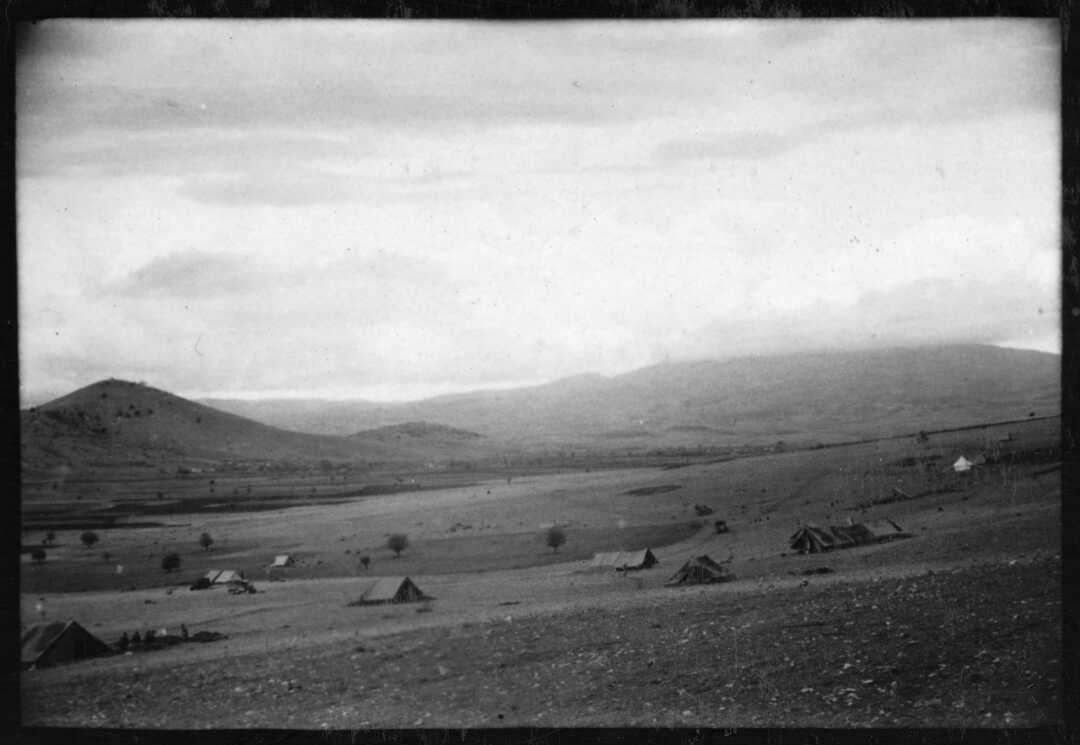
The choice of this site was not merely theoretical; it is visually confirmed by photographs taken by the New Zealand military photographer Ian Campbell Macphail between 3 and 11 April 1941. These images depict the station spread across the plain of Doliche, with dispersed installations—a deliberate tactic adopted to reduce vulnerability to enemy air attacks.
Doliche through the lens of Ian Macphail
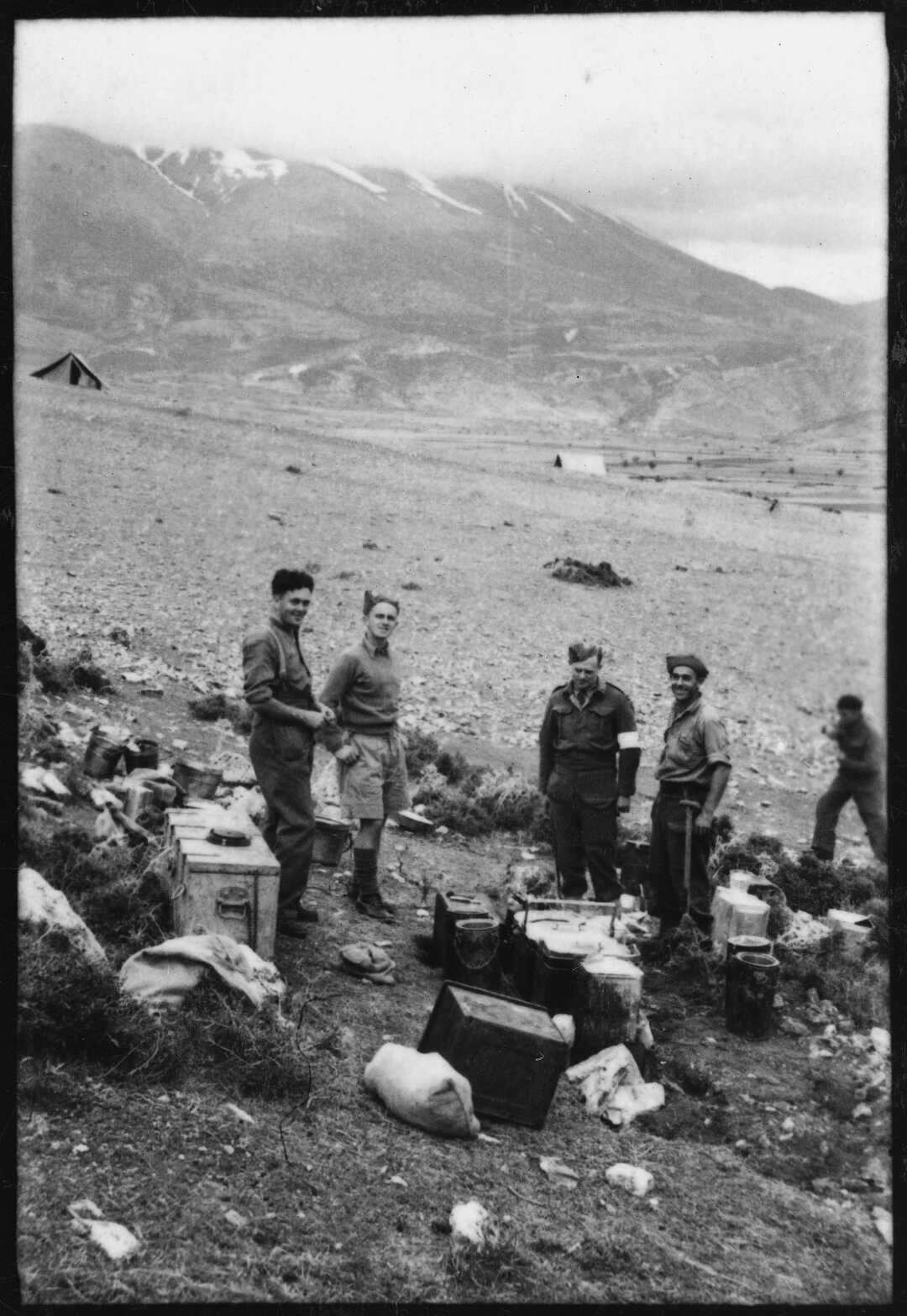
The photographs bearing reference numbers DA-12292-F, DA-12293-F, and DA-12298-F, beyond being military snapshots, constitute valuable historical testimonies. They document:
- the Main Dressing Station of the 5th Field Ambulance,
- the spatial layout of the medical facilities,
- and the everyday life of the soldiers, as captured in the characteristic image of the open-air cookhouse, where four members of the unit stand beside the catering equipment.
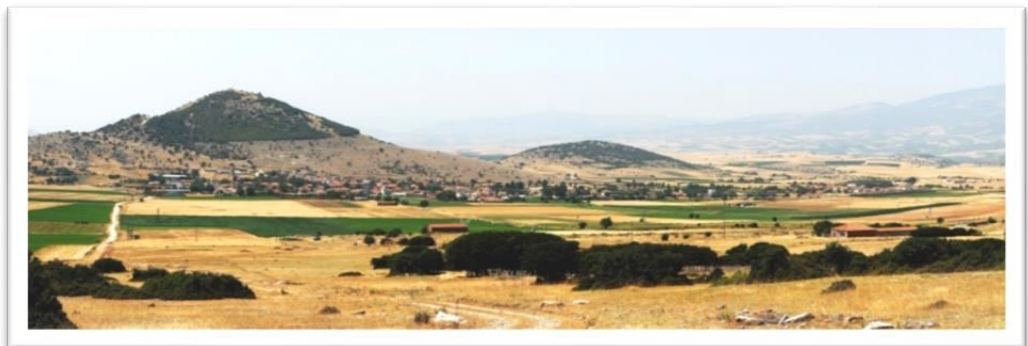
At the same time, these images offer a rare visual record of the landscape and settlement of Doliche in the early 1940s, revealing a form of the village markedly different from that of today.
Change of unit and harsh living conditions
Approximately one week later, as part of the reorganisation of Allied forces, the 5th Field Ambulance moved toward Servia, and its position at Doliche was taken over by the 4th Field Ambulance.
According to the official history of the medical units of the 2 NZEF, the arrival of the new unit (Headquarters and B Company) took place around 10–11 April, following an exhausting march through rain and mud. The men were forced to pitch their tents in darkness, under persistent drizzle and intense cold.
The following morning revealed a dramatic landscape: a valley surrounded by high hills, beneath the heavy shadow of Mount Olympus, on the slopes of Mount “Xylo.” Moisture, fog, and the poor condition of the road network compelled the medical personnel to work as labourers, humorously referring to themselves as “navvying nurses.”
The operational role of Dolikhe
Doliche functioned as the central evacuation hub for casualties of the 5th New Zealand Brigade, which was fighting to hold the Mount Olympus Pass. The chain of medical evacuation was clearly defined:
- Advanced Dressing Station at Agios Dimitrios (ADS),
- Main Dressing Station at Dolikhe (MDS),
- Casualty Clearing Station at Elassona (2/3 Australian CCS).
During the fighting, air raids and the constant passage of German aircraft were a persistent threat, making the operation of the station extremely hazardous.
Withdrawal and the end of the presence
On 16 April 1941, as the situation at the front rapidly deteriorated and German forces advanced toward Platamon and the Tempe Valley, the order for evacuation was issued. The Doliche station closed that same afternoon, and, amid torrential rain, the 4th Field Ambulance withdrew during the night, leaving behind only small evacuation detachments to collect the last casualties of the retreat.
The significance of the sources
The brief yet decisive presence of the New Zealanders at Dolikhe is today documented thanks to:
Primary photographic material
Alexander Turnbull Library, Wellington
Photographer: Ian Campbell Macphail (1907–1994)
Unit: 5th NZ Field Ambulance
https://tiaki.natlib.govt.nz/#details=ecatalogue.468090
https://tiaki.natlib.govt.nz/#details=ecatalogue.468160
https://tiaki.natlib.govt.nz/#details=ecatalogue.468120
Official military history
Medical Units of 2 NZEF in Middle East and Italy
https://www.22battalion.org.nz/publications/histories/medunits.pdf
These sources highlight Dolikhe not merely as a point on the map, but as an active site of military and humanitarian action, where, under extremely difficult conditions, lives were saved during the critical days of the spring of 1941.
 DOLICHE
Σχολιάστε