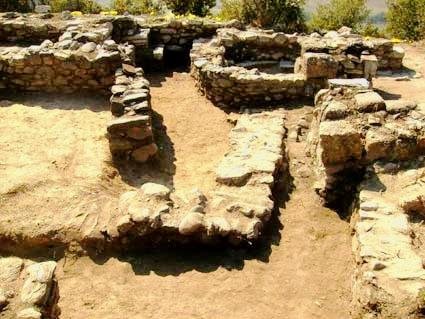
The archaeological site “Kastri of Doliche” is located approximately 4 kilometers west of Doliche. Excavations began in 2002 and brought to light three three-aisled basilicas as well as part of the enclosure wall of the Acropolis. The settlement was inhabited until the 7th century AD and constitutes a noteworthy and well-organized archaeological site, as it combines different types of structures of secular, religious, and defensive character.
1. The Inscription – the “Identity” of the City
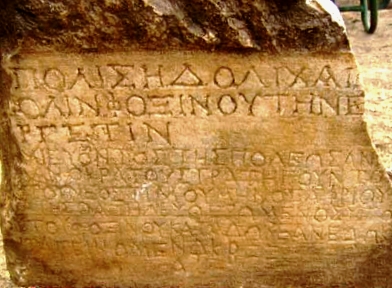
In 2006, a landmark discovery for local history was made. Embedded in the southern wall of Basilica C, a manumission inscription from the Roman period was found. This inscription read: “[THE] CITY OF THE DOLICHAIANS,” which allowed archaeologists to definitively and officially identify the site of Kastrí with the ancient city of Doliche. This was the first time that the name of the city had been discovered within the boundaries of the Perrhaebian Tripolitis.
2. The Three Early Christian Basilicas
• Basilica A:
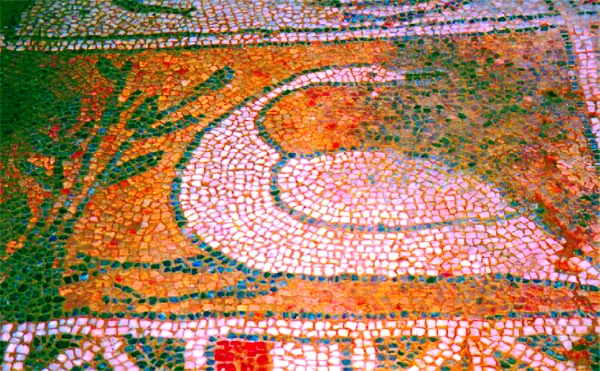
This is a three-aisled church with a mosaic floor in the central nave. The most interesting feature is the depiction of the symbol of the cross on the floor, a rare find, since at that time there was a prohibition against the faithful stepping on the sacred symbol. Its foundation is dated approximately to the year AD 553. The inscriptions found in Basilica A date to the 3rd and 2nd centuries BC; the first mentions the name PHILA EUBIOTOU, and the second the name DEMOPHIL[OS]. From another inscription found at Pythion, Phila Eubiotou is mentioned as a woman from Doliche, and Demophilos as a deceased hero, the husband of Phila.
• Basilica B:
Its excavation began in 2003 and it is probably dated to the second half of the 6th century AD.
• Basilica C:
It was located within the area of the acropolis, surrounded by houses and storage facilities.
3. The Acropolis and Daily Life
• Fortifications:
The wall of the acropolis constituted the city’s final line of defense during the Early Christian period.
• Houses and Tools:
Residential buildings and many objects of everyday use were found, such as metal tools, confirming that the inhabitants were systematically engaged in agriculture and livestock breeding.
• Domestic Production and Hunting:
The finds indicate a society in which men were engaged in hunting and women in household-based craft production.
4. The Cult of Heracles Kynagidas
Of particular interest are the epigraphic testimonies concerning the cult of Heracles Kynagidas, who was the protector of hunters. This cult was widespread in the region, and inscriptions even mention inhabitants of Doliche who served as priests of the god.
5. Coinage
In the wider area of the Perrhaebian Tripolitis, a unique coin of the 4th century BC has been found. It depicts Apollo with a laurel wreath and a tripod cauldron bearing the inscription “Tripolitan,” demonstrating the economic organization of the union of the three cities (Doliche, Azoros, and Pythion).
Today, many of these valuable finds, which date the city’s peak to the 5th and 6th centuries AD, are exhibited at the Diachronic Museum of Larissa.
This information is provided in order to highlight the significance of the finds for the history of the wider region.
No organized visits to the archaeological site are currently conducted.
 DOLICHE