From the Feast of the Cross to the Feast of the Life-Giving Spring | Wedding Customs and Songs of Doliche and Pythio
From the Feast of the Cross to the Feast of the Life-Giving Spring
The Cross
Twenty-one days after Carnival (on the second Sunday before Palm Sunday), young unmarried women—mainly from Doliche—would gather at midday at the site of the village primary school (built in 1948).
They decorated a gkioumi (a water vessel) with flowers and tree blossoms (mainly almond blossoms) arranged in the shape of a cross. The girls danced around the decorated vessel at the school site until late afternoon.
Then, still dancing, they carried the vessel with the cross and placed it at the location known as Aintini, where the dancing continued until nightfall.
The origin of the custom is unknown, and it continued until around 1980.
Today, this custom is no longer revived.
Tsakna
The Tradition
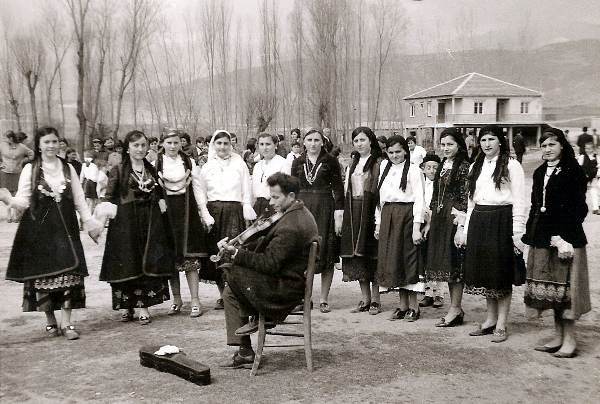
“Tsakna” took place every Sunday before Palm Sunday. After the morning Divine Liturgy, the young men and women of Doliche would go up to the hill of Prophet Elijah and celebrate with songs and dances. Residents of neighboring villages—Kokkinogi, Geraneia, Lofos, and Pythio—also participated.
Through Tsakna, people welcomed the arrival of spring. Tradition required them to eat xynithres, wild edible plants that grow among kermes oak shrubs. While eating the xynithres, they danced beneath the oak tree located at the ridge (stefani) of the Prophet Elijah hill and then continued at the large tree in the area called “Ofanos” on the same hill.
During their descent, singing and dancing continued without pause. Participants eventually gathered at the location “Aintini” in Doliche, where the festivities lasted until the afternoon.
It can be stated with certainty that Tsakna was organized before 1930, while from the mid-1960s the custom ceased to exist. However, from the mid-1950s, the people of Doliche danced Tsakna accompanied by the first gramophone owned by Pantelis Chr. Tsaknakis.
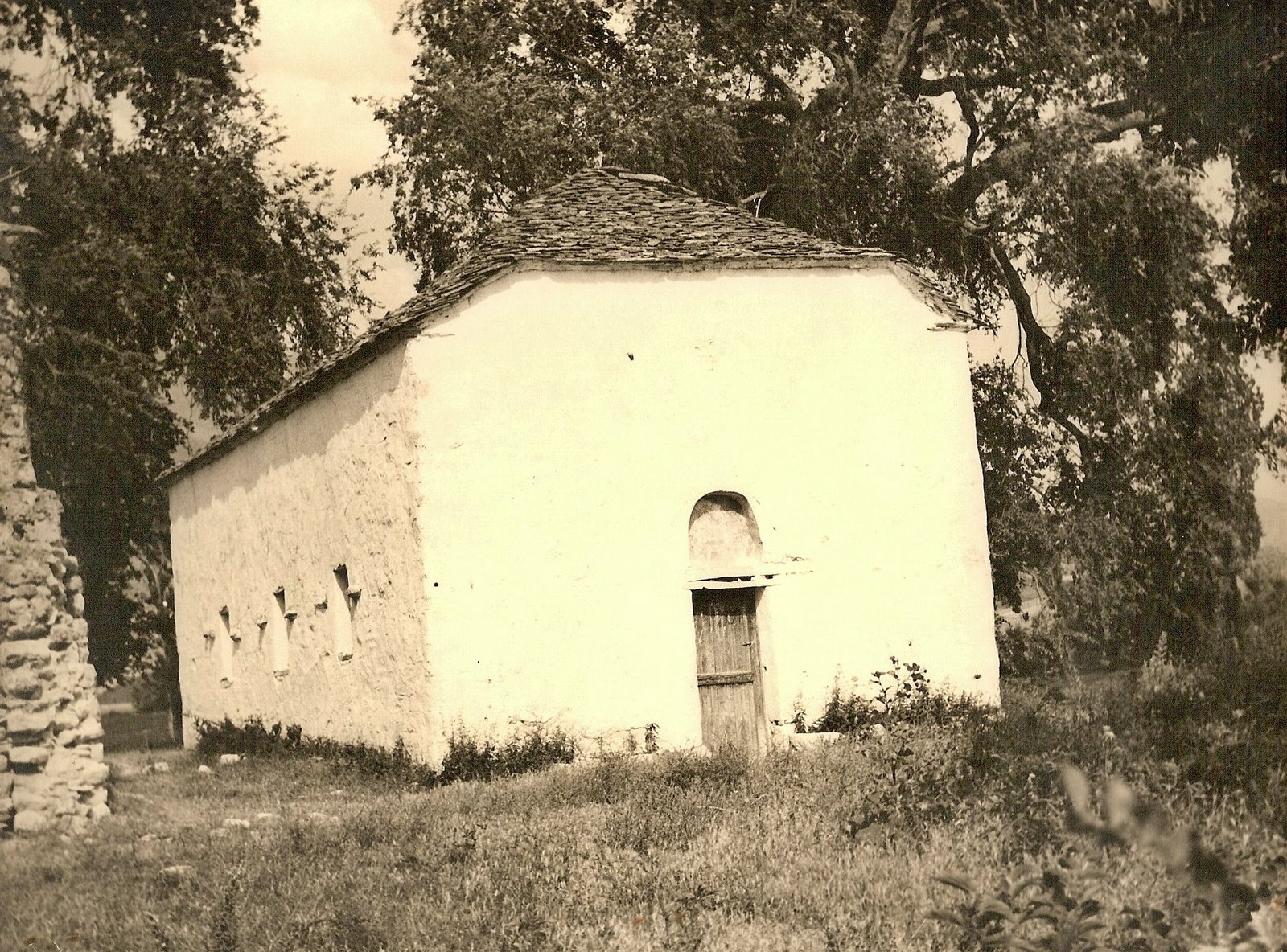
Since 2009, the custom has been revived by the Doliche Women’s Association “Phila, daughter of Eubiotus.” The women—primarily—gather at the chapel of Prophet Elijah, where an evening service is held, followed by dancing either at the ridge or at the hilltop. The women prepare various traditional dishes, and the dancing is accompanied by songs sung by the women themselves.
Lazarines
On the afternoon of Lazarus Saturday, the women of Doliche—mainly the younger ones—dressed in the traditional Lazarine costume (white skirts, black or red sarafani—a vest-like blouse—and white headscarves) danced Lazarus songs in the central square until nightfall.
They then gathered at the house of one young woman (it was a great honor to be the chosen one each year), where the celebration continued until the early morning hours of Palm Sunday. The Lazarines had already prepared various foods at home (pies and sweets), which they brought to the feast.
The young men stood outside the house where the Lazarines were celebrating, hoping to meet a prospective bride—an activity known as the “bride market” (nyfopazaro).
Palm Sunday
After resting for a few hours, the Lazarines went to church in the morning, along with all the residents of Doliche. Their costume on this day was different: they wore colorful dresses and aprons, a vest, and a crepe headscarf, usually dark blue. (The traditional Lazarine costumes currently owned by the Doliche Women’s Association are modeled on these outfits.)
In the central square, dancing followed by the Lazarines and all the villagers. Palm Sunday songs were sung, such as “I had a bridge over the sea…”. The songs had a mournful character, as Holy Week was approaching.
In the afternoon, after the midday rest, the festivities resumed in the central square and lasted until nightfall.
Today, the custom of the Lazarines is revived every Palm Sunday by the Doliche Women’s Association.
Holy Week – Easter
On Holy Thursday, the women of Doliche kneaded Easter bread known as ftasmiditiko. It was prepared like tsoureki, but the yeast was made using basil and chickpeas. The bread was baked on that day and eaten on Easter Sunday. On the same day, as is still done today, eggs were dyed red.
On the morning of Holy Thursday, women symbolically placed a red cloth—signifying Christ’s death—usually in the courtyard of the house. They also painted red crosses on the foreheads of children and on the backs of sheep.
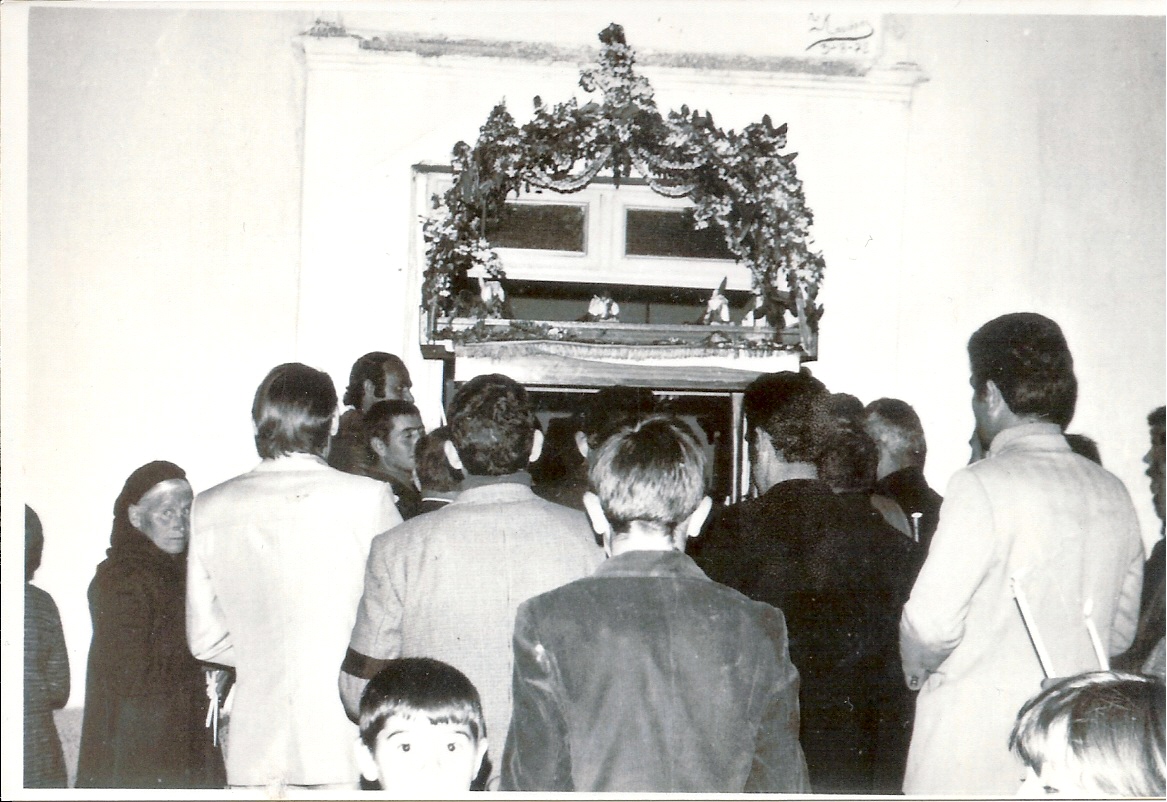
On Holy Thursday and Holy Friday, unmarried girls gathered flowers to decorate the Epitaphios. The decoration began on the morning of Holy Friday.
On Holy Friday, the procession of the Epitaphios took place from the main church of the Transfiguration of the Savior.
On Holy Saturday, the people of Doliche awaited the Resurrection, and most attended the Divine Liturgy that followed.
On Easter Sunday, lamb was baked in ovens until about the late 1970s; afterward, it was roasted on a spit. Dancing followed in the central square with joyful Resurrection songs, from Sunday afternoon until nightfall.
On Easter Monday (the Second Resurrection), after the Divine Liturgy, dancing again took place in the central square. In the afternoon, only the young men and women went to celebrate at the location “Aintini” until nightfall. The same occurred on the Tuesday after Easter.
This three-day celebration expressed both the joy of the Resurrection and the people’s need for festivity.
These customs continued until the late 1960s, although it is not known exactly when or how they began.
Life-Giving Spring
On the Friday after Easter, the Divine Liturgy was celebrated—as it still is today—at the Church of the Panagia of the Life-Giving Spring, located in the area “Topoliani” of Pythio. The people of Doliche went there from early morning.
Residents of Pythio, Kokkinogi, Geraneia, Lofos, and other surrounding villages also participated. The celebration began with traditional folk songs. In the church courtyard, there were small vendors, as the event took the form of a small fair. The inhabitants of the different villages either danced separately—by village—or all together.
The beginning of the celebrations of the Life-Giving Spring cannot be precisely determined, but it can be said that the festival continued until around 1990, gradually declining from the early 1980s.
On Thomas Sunday, after the Divine Liturgy, the people of Doliche danced once again in the central square.
 DOLICHE